Envelope

Algorithmic content created for Envelope II Festival at Testdrive, Nicosia [CY], December 2017.
A celebration of analog/modular synthesis and live electronic music, Envelope Festival presents various local artists to perform their latest work.

Live Music Performances by

White— Whirl-DOS + Uvglov
Green— αίθερ λίνα
Blue— Mihalis Sham
Red— elektroniki
Silver— Oswaldo III

The Irrational Instrument

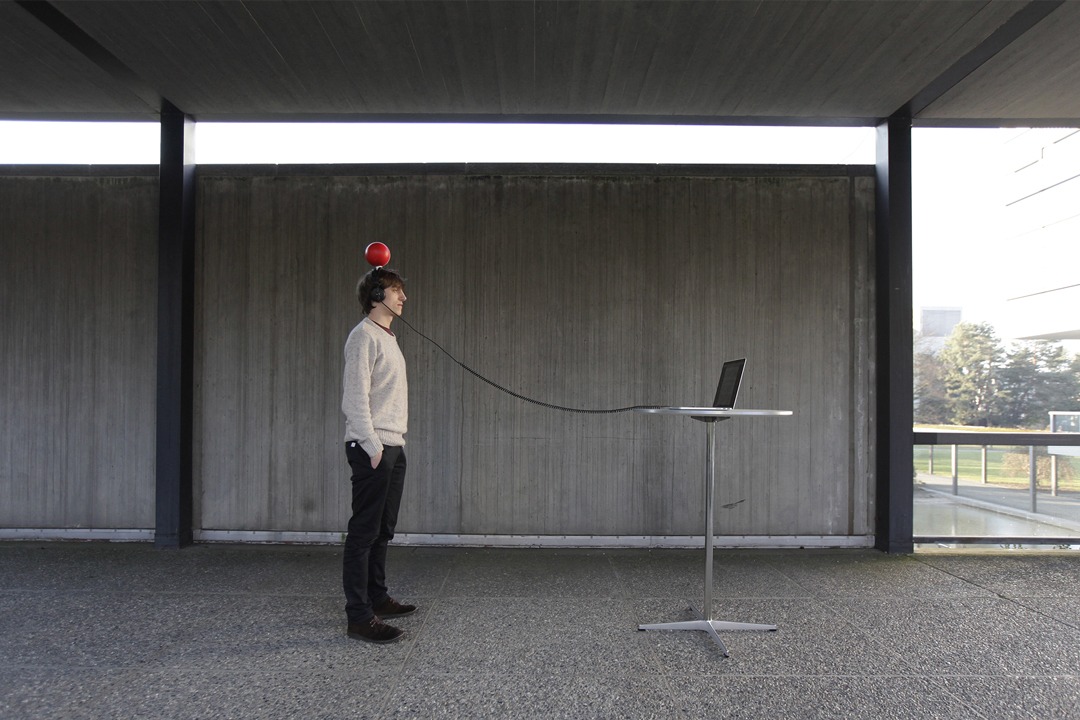
The Irrational Instrument is a narrative on continuity, as seen through the dipole of object and sound. By object and sound I refer to the object (as designed and manufactured geometry) able to produce a specific sound and inversely the sound (as experienced timbre) which can not be produced by any other than that specific object.

Moving across references by Dedekind, Leibniz, Deleuze, Badiou, the project examines the creation of three abstract machines which are trained by an initial set of existing objects (rationals) in order to create a symbolic space as receptacle of new unknown objects (irrationals).

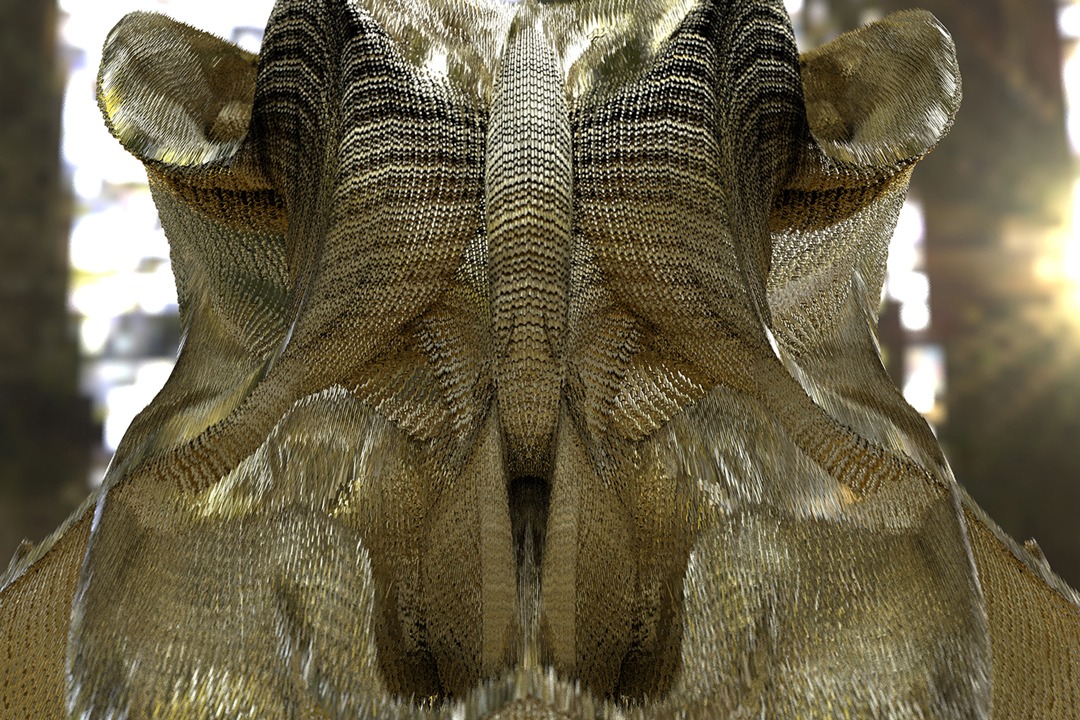
Breaking down the input objects into numerical entities and working primarily with the Principal Component Analysis algorithm, a tool is offered to infiltrate the intermediate space of uncertainty, to design not objects but possibility spaces where populations of abstract objects are found. By drawing a line of flight, we stumble upon this open world; and it is a world inhabited by nomadic, familiar yet alien artifacts.

[original text excerpt] “The space within which this object emerges is not an empty space but it possesses laws (νόμους) while remaining a smooth space. It is an a priori shaped by the machine space, has intensities, pushes and pulls, areas of relaxation or of extreme density, valleys and mountains of less or more probability of existence. There, new objects can present themselves, can be summoned as fragile moments—or cases—of a field of smoothness.”

The House

“It all begins with a knock on the door, a blade of light cutting through the darkness of our own privacy. Every house, every place we call our own, is a limit and a protection at the same time, and every visitor entering our sacred ground is both welcome and imposing, friendly and aggressive. And yet, we still open the door. We respond to the relentless banging of Otherness on the threshold of Solitude, instinctively curious and unavoidably bothered by that nuisance and that discomfort caused by the presence of another human being in our own space, our own life. But as Virigina Diakaki says via one of the three actors that gave voice to her writings in The House, «We all love that little discomfort we feel every time someone imposes his limits on us».

Focused on a simple visit that turns into an absurd (and all too true) existential confrontation, this «original modern Greek work in theatrical audiovisual installation form, co-created by four young Greek artists», may very well be one of the most interesting pieces of theatre we have seen so far around these latitudes. By actually exploring those grey areas at the border of things, the quartet composed by musician/sound designer Alexis Retsis, lighting designer Christina Thanasoula, digital artist Demetris Shammas and the aforementioned writer, manages to offer a new form of expression in which the new and the old merge exquisitely, leading to an hybrid coexistence that is both convincing and enticing.

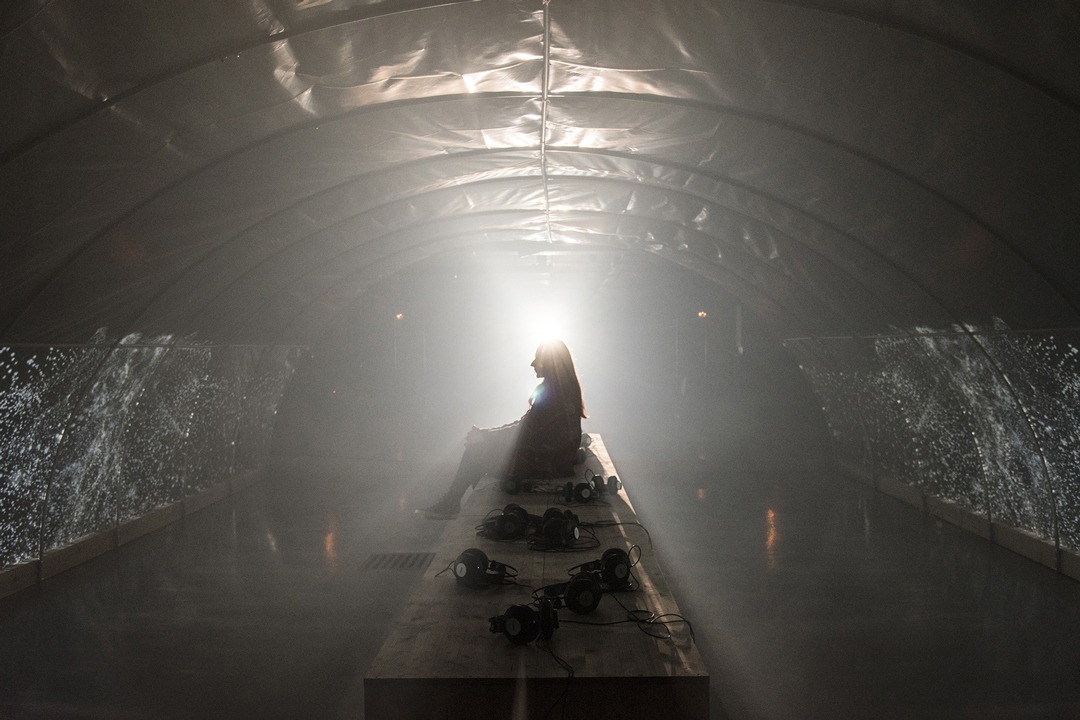
The audience, led by the hand into a foggy underground parking with neon lights flickering amongst the concrete pillars, sits on a simple bench and wears headphones. Silence surrounds us, until a soft music begins to play, and we are left to wonder what will come next. Thus the listener/voyeur, significantly placed at the centre of the space, slowly becomes aware that the play is about himself/herself, finding too many common traits with the man and the woman that whisper and scream to our ears. The House is an «allegorical story about the fake feeling of freedom», about all those strangers we let into our lives with reluctance just to end up loving and needing them, as long as they exonerate us «from the exclusive responsibility of existence». Indeed, how happy is the blameless people’s lot, when we delegate the very definition of ourselves to a partner, a husband, a wife, a fellow human being, and how miserable are all those who try to swim against the current, painfully trying to overcome the feeling of loneliness and dependence by looking inwards instead of outwards?

With violence reminiscent of Sarah Kane’s Blasted, Virginia Diakaki weaves a well-paced web of words that besiege the Self without giving it any rest, slapping and blinding it from the very beginning – showing no mercy for anyone, let alone for us. 50 minutes of pure psychological war that turn out to be a mere taste of what we do to each other and to ourselves every single day. 50 minutes of necessary extremes that put us all to shame for not being able to see how weak and sadistic we truly are. 50 minutes of gorgeously crafted theatre.”

text by Francesco Chiaro
Things inside other things

17:00–18:00.
Four one–hour recordings are made in four main locations of the divided city of Nicosia.

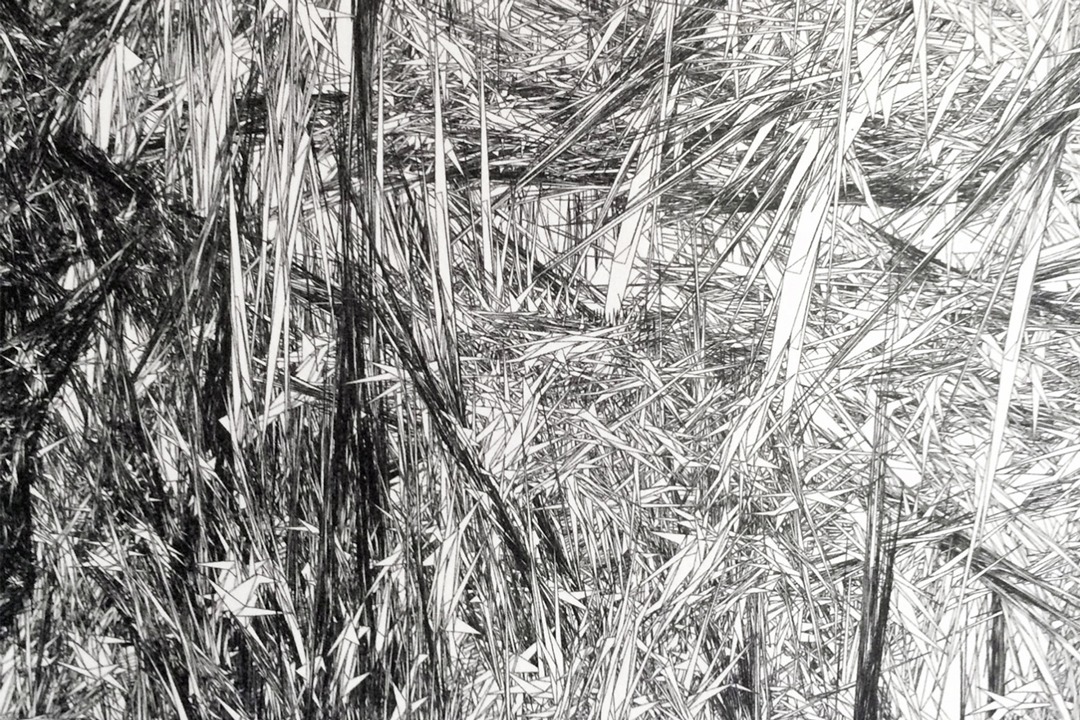
The empty canvas follows a subdivision process driven by the numerical values of the city’s soundscape. As the output moves towards ambiguity and all recognizable elements disappear, the observer is confronted with an abstract map that no longer carries cultural characteristics of ‘this’ or ‘the other’ community, nor does it force comparative connotations. It is instead offered as an unsolvable riddle, a new kind of city map generated by the city itself.

The produced drawing’s constellations emerge at manifold scales, as the algorithms determine the overall form as well as generate the various microscopic details. The drawings, though computationally designed, exist as such only in printed form, where the visibility of each of their components is directly related to the observer’s distance.

Shape Grammars

Shape Grammars is an ongoing research on how a simple geometric process can generate forms of great complexity when repeatedly employed.

The form starts off as a cube of six faces. A single rule is employed to divide each face into smaller faces and each next iteration follows this identical rule. The studies begin with simple self-devised subdivision processes and proceed to explore known algorithms such as the Catmull–Clark.

The project aims to question what a designed object is or should be and allows degrees of unpredictability in the final surface and overall form.

Sit. Move.

Two players.
Two acts.

Act 1 :
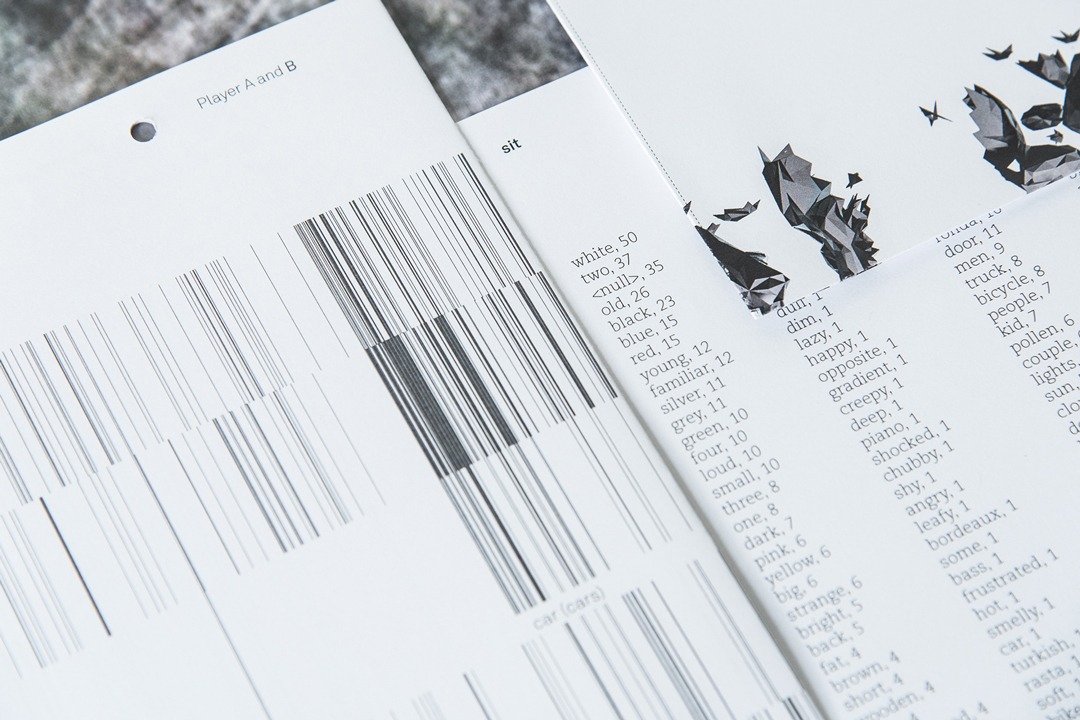
Two players sit simultaneously at a fixed point and record their experience in a structured manner – adjective noun verb, one man walking, white car passing.
How can two different ways of seeing be compared?

Act 2 :
Two players move separately and exchange maps that point to the places they explored.
How can their distinct experience of things construct a collective map?

The process is presented in the form of a book in two levels:
The bound section of the book, the raw material or the moment of acting and reenacting.
The unbound section of the book, the processing or response to the recorded material.

Earthgaze / Stargaze

The Gathering is a yearly festival organised by Honest Electronics in order to promote underground talent from Cyprus.

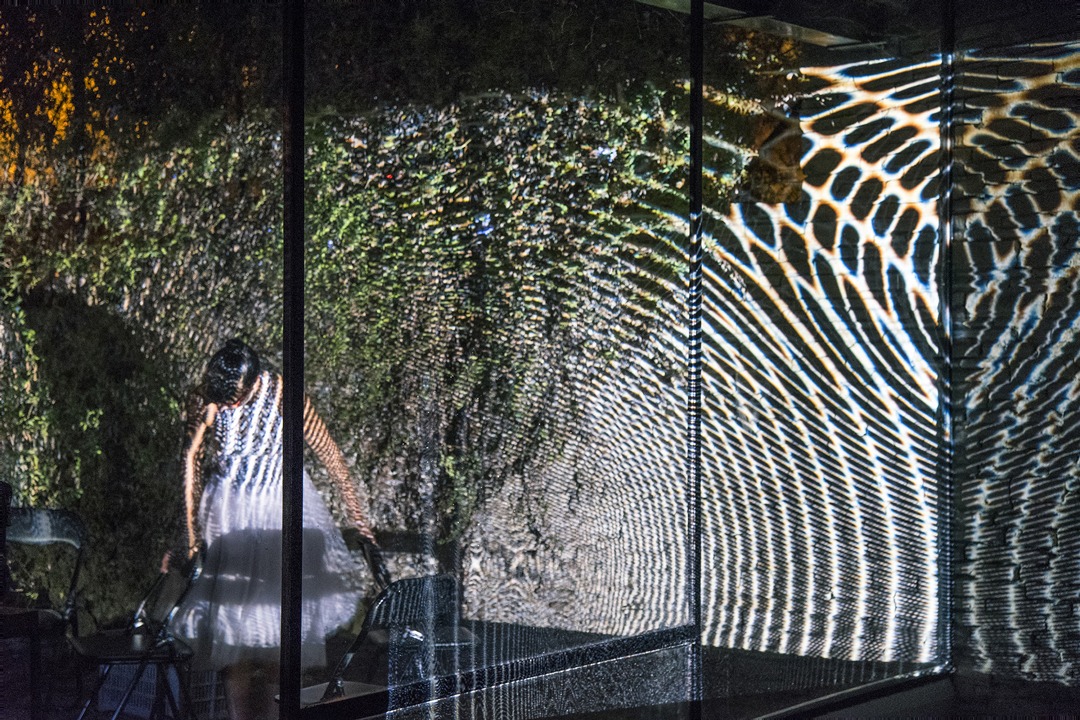
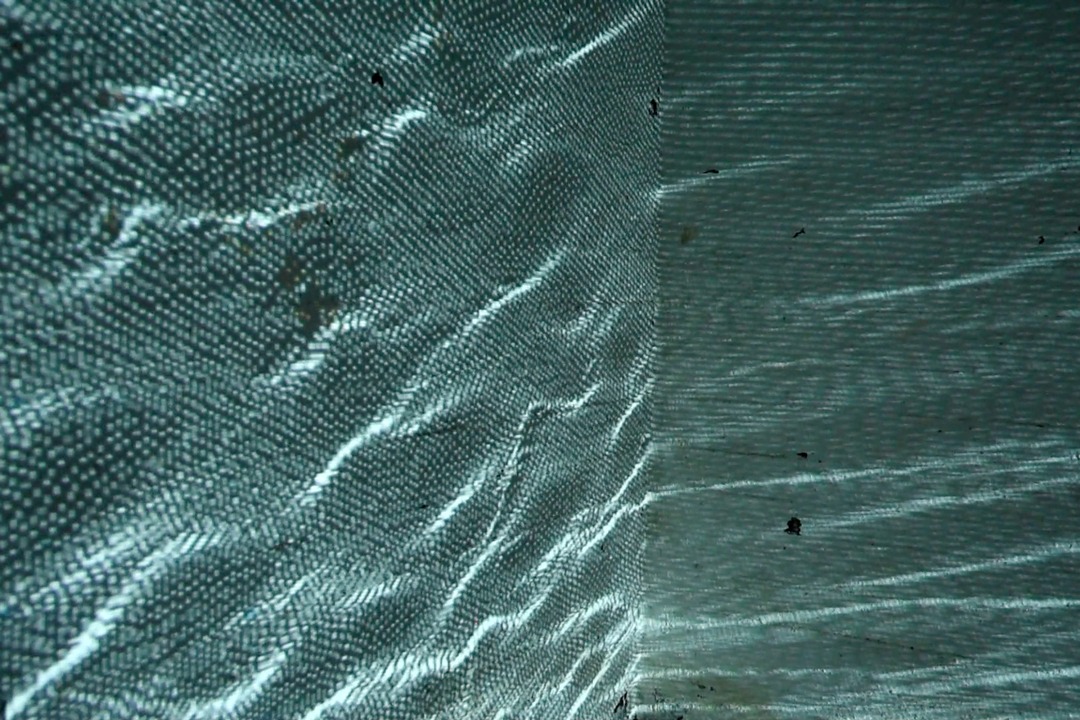
Earthgaze / Stargaze were two nights of live ambient & downtempo electronic music, performed at the magical location of Tamassos Reservoir. The Gaze Stage were the events took place was designed for an audiovisual experience by Eleni Diana Elia and Demetris Shammas.

Dishonest

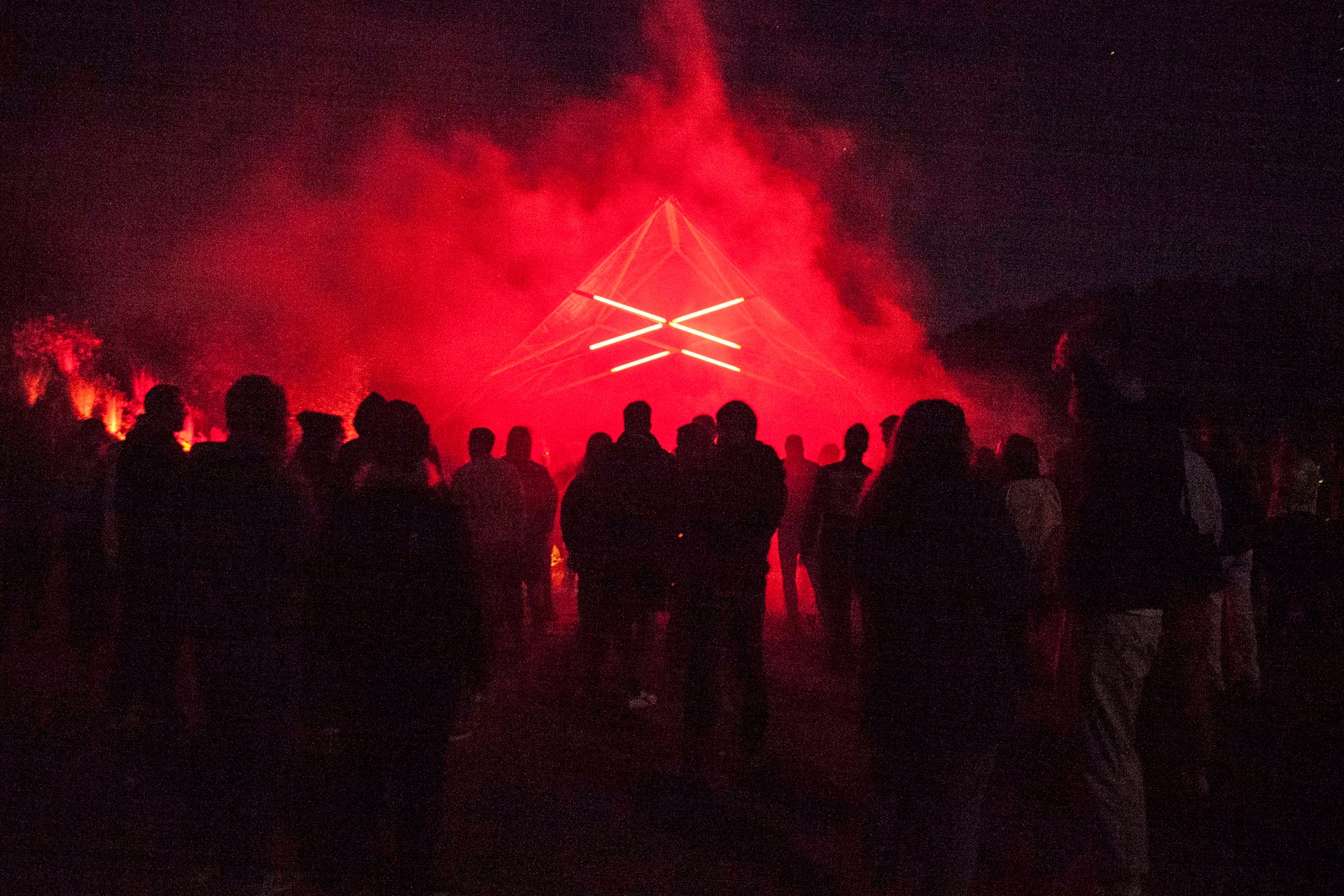
Volcano Stage Design and Construction for DISHONEST II — Outdoor Mini-Festival.