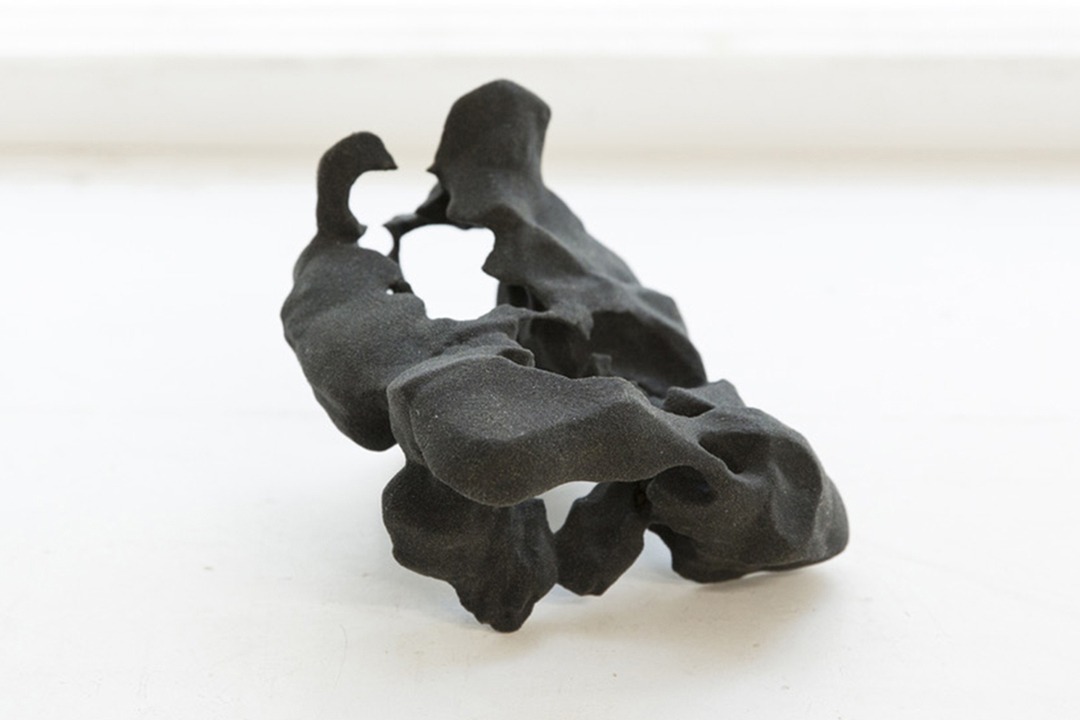
The search for something lost, yet memorized, can resolve to a finding that meets one’s initial expectations. A Hrönir, of the planet Tlön*, is an object of this kind. Once lost, it may be found by separate individuals—multiply duplicated—each finding the version of it they were most looking for. It is an object produced by the act of remembrance. Remembering the way it was; or the way one thinks, hopes, or wishes it were.
False Memory Machine is an algorithm that—in a process of remembering—produces artefacts of what could have been the case. The algorithm is trained by a set of one hundred and forty four objects that had in the past been meaningful for the artist. Objects connected to important life events and which provoke an emotional reaction. A horse toy; a eucalyptus leaf; a Chinese teapot; a mountain bike; a classical guitar; a left glove; an army rifle. From this process derives a possibility space, where new instances of objects can occur. The Machine gropes its way through this space just as a potter molds their clay, going through various forms, distorting, melding, blurring edges, at times coming across familiar details, and renders new objects real; never perfect, never true.
The false memories—presented as material things—resemble dug-up archaeological finds; fragmented, obscure, misshapen.
* Jorge Luis Borges, “Tlön, Uqbar, Orbis Tertius”
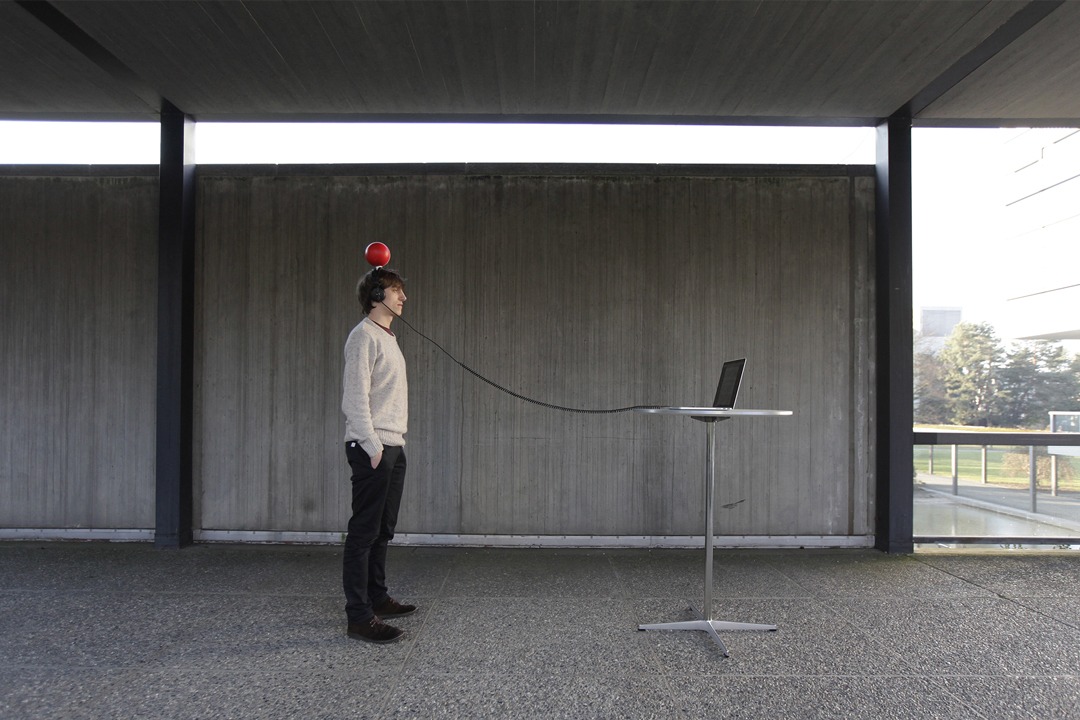
The Irrational Instrument is a narrative on continuity, as seen through the dipole of object and sound. By object and sound I refer to the object (as designed and manufactured geometry) able to produce a specific sound and inversely the sound (as experienced timbre) which can not be produced by any other than that specific object.
Moving across references by Dedekind, Leibniz, Deleuze, Badiou, the project examines the creation of three abstract machines which are trained by an initial set of existing objects (rationals) in order to create a symbolic space as receptacle of new unknown objects (irrationals).
Breaking down the input objects into numerical entities and working primarily with the Principal Component Analysis algorithm, a tool is offered to infiltrate the intermediate space of uncertainty, to design not objects but possibility spaces where populations of abstract objects are found. By drawing a line of flight, we stumble upon this open world; and it is a world inhabited by nomadic, familiar yet alien artifacts.
[original text excerpt] “The space within which this object emerges is not an empty space but it possesses laws (νόμους) while remaining a smooth space. It is an a priori shaped by the machine space, has intensities, pushes and pulls, areas of relaxation or of extreme density, valleys and mountains of less or more probability of existence. There, new objects can present themselves, can be summoned as fragile moments—or cases—of a field of smoothness.”
17:00–18:00.
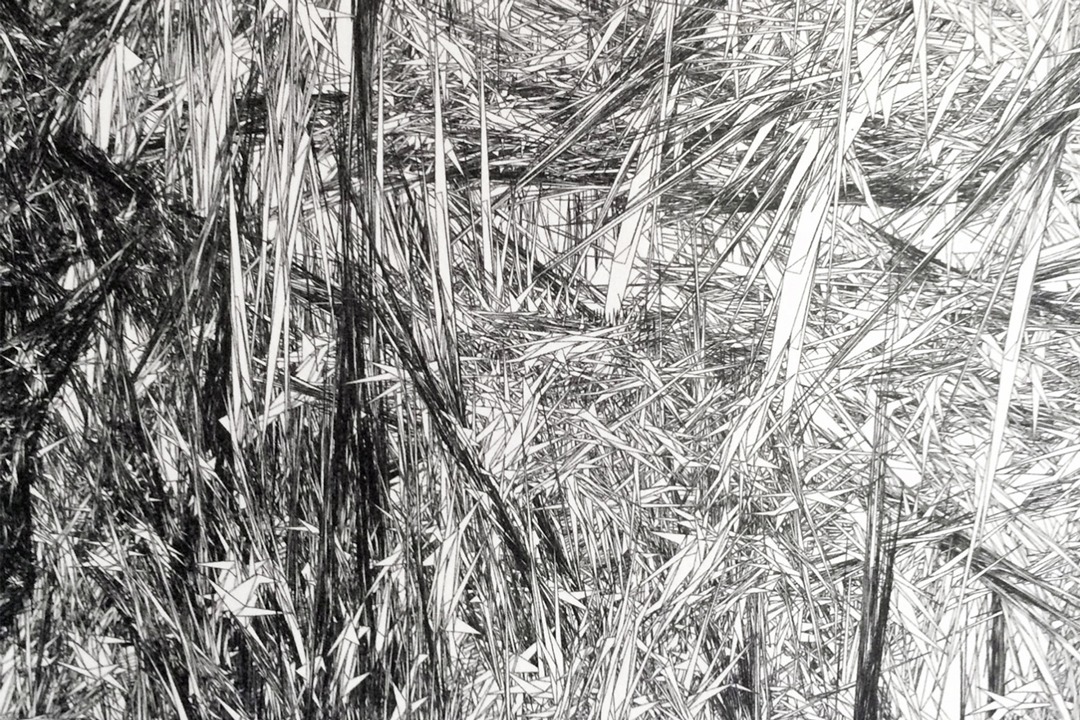
Four one–hour recordings are made in four main locations of the divided city of Nicosia.
The empty canvas follows a subdivision process driven by the numerical values of the city’s soundscape. As the output moves towards ambiguity and all recognizable elements disappear, the observer is confronted with an abstract map that no longer carries cultural characteristics of ‘this’ or ‘the other’ community, nor does it force comparative connotations. It is instead offered as an unsolvable riddle, a new kind of city map generated by the city itself.
The produced drawing’s constellations emerge at manifold scales, as the algorithms determine the overall form as well as generate the various microscopic details. The drawings, though computationally designed, exist as such only in printed form, where the visibility of each of their components is directly related to the observer’s distance.
Two players.
Two acts.
Act 1 :
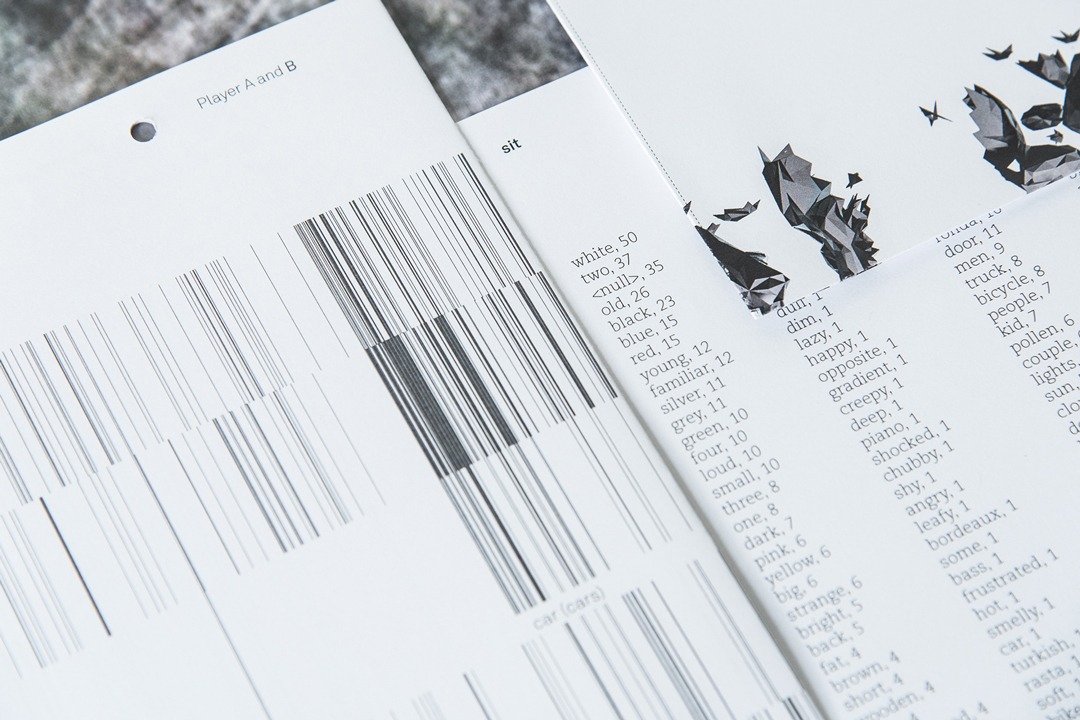
Two players sit simultaneously at a fixed point and record their experience in a structured manner – adjective noun verb, one man walking, white car passing.
How can two different ways of seeing be compared?
Act 2 :
Two players move separately and exchange maps that point to the places they explored.
How can their distinct experience of things construct a collective map?
The process is presented in the form of a book in two levels:
The bound section of the book, the raw material or the moment of acting and reenacting.
The unbound section of the book, the processing or response to the recorded material.